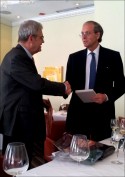
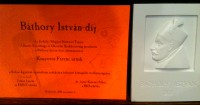
  5/28/2014 - Bishop Laszlo Tokes confers Báthory Award for American Hungarian Federation President
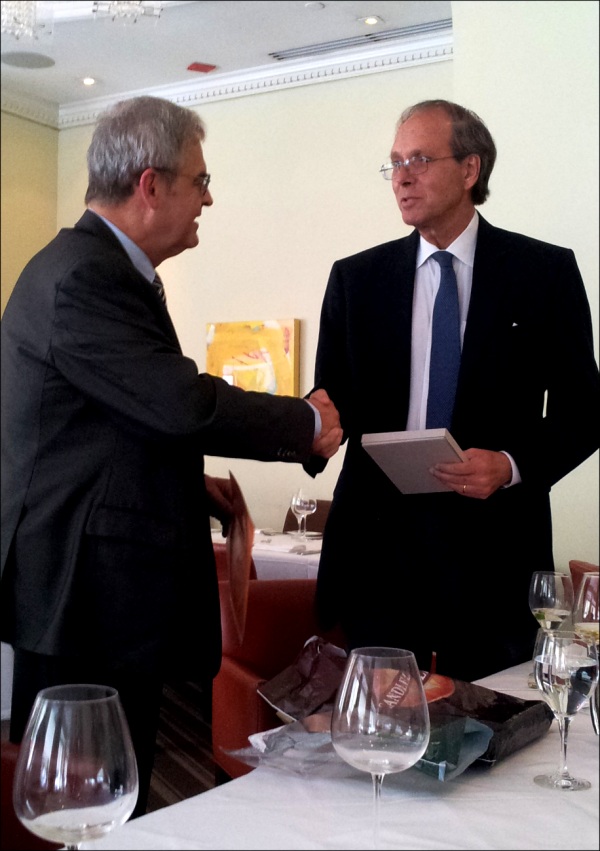
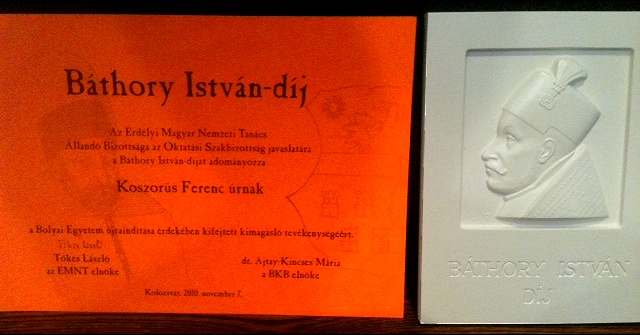
Frank Koszorus, Jr. In 2010, on the recommendation of the Bolyai Committee (BKB), the Hungarian National Council of Transylvania (EMNT) had bestowed the Bathory Award upon Mr. Koszorus who has championed the rights of national minorities for over thirty years, but was unable to attend the awards ceremony in Transylvania in 2010 when BKB and EMNT also bestowed the award upon 14 other awardees, including US Congressman Tom Lantos and Gov. George Pataki [Visit the Bolyai University for a full list] or see the list in the right column. 5/28/2014 - Bishop Laszlo Tokes confers Báthory Award for American Hungarian Federation President
Frank Koszorus, Jr. In 2010, on the recommendation of the Bolyai Committee (BKB), the Hungarian National Council of Transylvania (EMNT) had bestowed the Bathory Award upon Mr. Koszorus who has championed the rights of national minorities for over thirty years, but was unable to attend the awards ceremony in Transylvania in 2010 when BKB and EMNT also bestowed the award upon 14 other awardees, including US Congressman Tom Lantos and Gov. George Pataki [Visit the Bolyai University for a full list] or see the list in the right column.
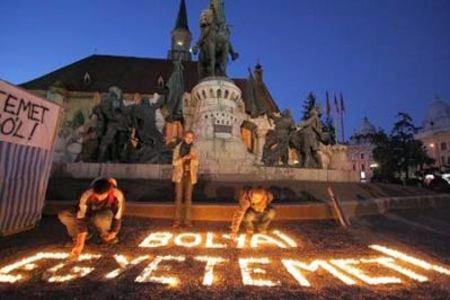
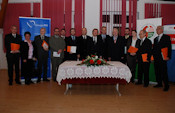 The Bathory Award is given to those outstanding individuals who contributed to cause of Hungarian-language higher education in Romania. EMNT president Tőkés László, who was instrumental in the 1989 Rumanian revolution that ousted Ceaucescu, presented the awards. In his opening comments, Mr. Tokes commented on how, even after 20 years of post-communism, the Rumanian government political and cultural elite fears calls for human and minority rights for ethnic Hungarians and how they try to convince the public about the Babes-Bolyai University's fake multiculturalism. Despite constitutional guarantees relating
to the right to an education in the mother tongue, Rumania has failed
to restore the independent Hungarian state university. The Bathory Award is given to those outstanding individuals who contributed to cause of Hungarian-language higher education in Romania. EMNT president Tőkés László, who was instrumental in the 1989 Rumanian revolution that ousted Ceaucescu, presented the awards. In his opening comments, Mr. Tokes commented on how, even after 20 years of post-communism, the Rumanian government political and cultural elite fears calls for human and minority rights for ethnic Hungarians and how they try to convince the public about the Babes-Bolyai University's fake multiculturalism. Despite constitutional guarantees relating
to the right to an education in the mother tongue, Rumania has failed
to restore the independent Hungarian state university.
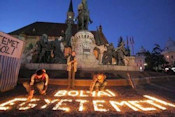 In a 2006 statement, the American Hungarian Federation called attention to an egregious violation of human rights when two Hungarian
professors – Peter Hantz and Lehel Kovacs – were expelled
from Babes-Bolyai University for placing parallel Hungarian inscriptions
below Romanian language signs at the so-called multicultural institution. In a 2006 statement, the American Hungarian Federation called attention to an egregious violation of human rights when two Hungarian
professors – Peter Hantz and Lehel Kovacs – were expelled
from Babes-Bolyai University for placing parallel Hungarian inscriptions
below Romanian language signs at the so-called multicultural institution.
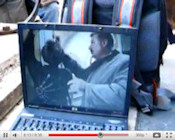
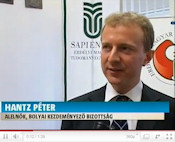
Professor Hantz can be seen here in the video placing a Hungarian no-smoking sign. Mr. Koszorus was instrumental in drafting the statement. Peter Hantz, BKB Vice President, attended the ceremony. He said, "we cannot accept that one of Europe's largest national minorities suffer such a violation of rightsespecially when it comes to higher education." (Nem szabad elfogadnunk, hogy Európa egyik legnagyobb nemzeti kisebbsége ekkora
jogsértéseknek legyen az áldozata, ami felsőoktatását illeti.)
”It’s both a humbling experience and a great honor to have been considered for the Bolyai Award,” said Koszorus. ”While I am most grateful to BKB and EMNT for bestowing this honor upon me, it is the Hungarian people of Erdely who truly deserve our special recognition and focused attention,” he added.
About Frank and the Koszorus Family
The Koszorus family originally hails from Nagyvarad and moved to Debrecen 300 years ago, while his mother’s family has a Szekely background. Koszorus is an attorney, government relations advisor and consultant in Washington, D.C. In addition to pursuing his professional career as an attorney, government relations advisor and business consultant, Koszorus, son of Holocaust Hero Gen. Ferenc Koszorus, Sr., has championed the rights of minorities, including the Hungarian minority in Romania, for over thirty years on a pro bono basis. Below is a brief summary of selected activities undertaken by Koszorus in this regard.
- Koszorus served as a public member of the U.S. delegation to the Paris meeting of the Conference on Security and Cooperation in Europe on the Human Dimension. In that capacity he assisted in the drafting of the U.S. intervention regarding minority rights in a plenary session of the Conference and participated in bilateral meetings with, among others, the Romanian delegation.
- He has lectured or served as a panelist on foreign policy, public diplomacy, human rights and minority rights issues (relating to Hungarian minority matters) at colleges, universities and other entities, including the Institute for the Study of Diplomacy of Georgetown University; Syracuse University College of Law; The American University (School of International Relations); Ohio Northern University; University of Indiana; Shepherd University; George Mason University; the International Monetary Fund; Radio Free Europe/Radio Liberty; and the Hudson Institute’s Center for European Studies.
- Koszorus testified before several congressional committees and other bodies, including the Senate Foreign Relations Committee, the House Committee on Ways and Means, the House Committee on Foreign Affairs, and the Commission on Security and Cooperation in Europe on issues such as MFN and Romania and NATO enlargement and minority rights.
- He briefs government officials on policy issues, including matters affecting the Hungarian minority in Romania. Koszorus debated NATO enlargement and the situation of Hungarian minorities on The Kojo Nnamdi Show, WAMU and has been interviewed by print and broadcast media.
- Koszorus is the author of numerous position papers and articles, including a chapter on The League of Nations Minority Protection System and an article in Foreign Policy Review, Autonomy: The Path to Democracy and Stability in Romania. He co-authored an article (with C. K. Zoltani) in “The Fletcher Forum of World Affairs,” Collective Rights Defuse Tensions. He also participated on an advisory panel for a Carnegie Endowment for International Peace project which culminated in the publication Self-Determination in the New World Order. Numerous letters and articles written by Koszorus have been published by various newspapers and other media outlets.
- He participated in a number of organizations that address issues concerning Central and Eastern Europe, U.S. policy toward the region and Hungarian minorities. For instance, Koszorus helped found the Committee for Danubian Research, which assisted with the establishment of the Teleki Laszlo Institute, co-sponsored and disseminated scholarly books, and invited visitors from CEE to Washington, D.C. His decade-long involvement with the Washington-based International Human Rights Law Group focused on the Hungarian minority in Romania.
- Koszorus was an initial founder of the Hungarian American Coalition, and he vigorously spoke out in support of minority rights while serving on the Executive Committee and as Chairman of the Information Committee of that organization.
He currently serves as President of the more than one hundred year old American Hungarian Federation where he continues to raise minority rights issues, such as autonomy, the restoration of the Babes/Bolyai University as a Hungarian institution, and the present-day impacts of the Treaty of Trianon. In November 2010 he represented the Federation at the MAERT conference in Budapest. Several of his writings can be found on the Federation’s website. Honors received by Koszorus for his work on behalf of Romania’s Hungarian minority also includes the International Human Rights Law Group’s pro bono Service Award (also honoring his law firm).
[<< Back to News from Rumania]
[<< Back to All AHF News]
| [<< Back to News from Rumania]
 "A Báthory Díjat a Bolyai Kezdeményező Bizottság (BKB) javaslatára az Erdélyi Magyar Nemzeti Tanács (EMNT) oktatási szakbizottsága adományozza évente legfennebb tizenöt személyiségnek vagy szervezetnek, akik az adott évben, vagy a megelőző időszakban a legtöbbet tették a romániai, állami finanszírozású magyar felsőoktatás megteremtése érdekében." "A Báthory Díjat a Bolyai Kezdeményező Bizottság (BKB) javaslatára az Erdélyi Magyar Nemzeti Tanács (EMNT) oktatási szakbizottsága adományozza évente legfennebb tizenöt személyiségnek vagy szervezetnek, akik az adott évben, vagy a megelőző időszakban a legtöbbet tették a romániai, állami finanszírozású magyar felsőoktatás megteremtése érdekében."
Related articles:
2010 Bathory Award Recipients:
2010. évi díjazottak:
· Antal András, nyugalmazott agronómus professzor
· Ádám Valérián, a Marosvásárhelyi Orvosképzésért Alapítvány ügyvivője
· Deák Ernő, a Nyugat-Európai Magyar Szervezetek Szövetségének elnöke
· Duna Televízió
· erdely.ma hírportál
· Koszorús Ferenc, az American Hungarian Federation elnöke
· Kossuth Rádió, Határok nélkül műsora
· Krónika napilap
· M2 Kárpát Expressz műsora
· Smaranda Enache, a Pro Europa Liga elnöke
· Székely Levente, a Genfi Magyar Misszió első beosztottja
· Szilágyi Zsolt, egykori parlamenti képviselő
· Szőcs Géza, költő
· Vincze László, újságíró
· Wanek Ferenc, a Bolyai Társaság egykori elnöke
· Zsembery Ferenc, mérnök-vállalkozó
Why So Many Hungarians Across the Border?
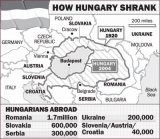 One thousand years of nation building successfully delineated groups based on culture, religion, geography, and other attributes to create the countries with which we are so familiar. While some Western European nations would continue power struggles and princely battles and civil wars, Hungary, founded in 896, was a peaceful multi-ethnic state for a 1000 years and her borders were virtually unchanged. Until 1920... One thousand years of nation building successfully delineated groups based on culture, religion, geography, and other attributes to create the countries with which we are so familiar. While some Western European nations would continue power struggles and princely battles and civil wars, Hungary, founded in 896, was a peaceful multi-ethnic state for a 1000 years and her borders were virtually unchanged. Until 1920...
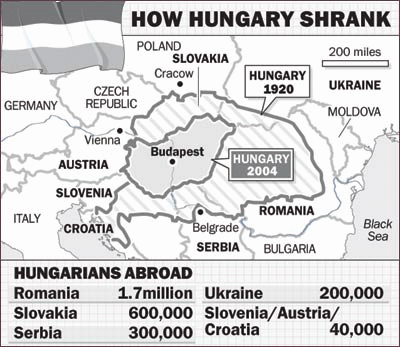
The Treaty of Trianon in 1920... in the aftermath of WWI, was extremely harsh on Hungary and unjustifiably one-sided. The resulting "treaty" lost Hungary an unprecedented 2/3 of her territory, and 1/2 of her total population or 1/3 of her Hungarian-speaking population. Add to this the loss of up to 90% of vast natural resources, industry, railways, and other infrastructure. The clear winner of the land grab, was Rumania, who, established only 60 years earlier, more than doubled in size overnight.
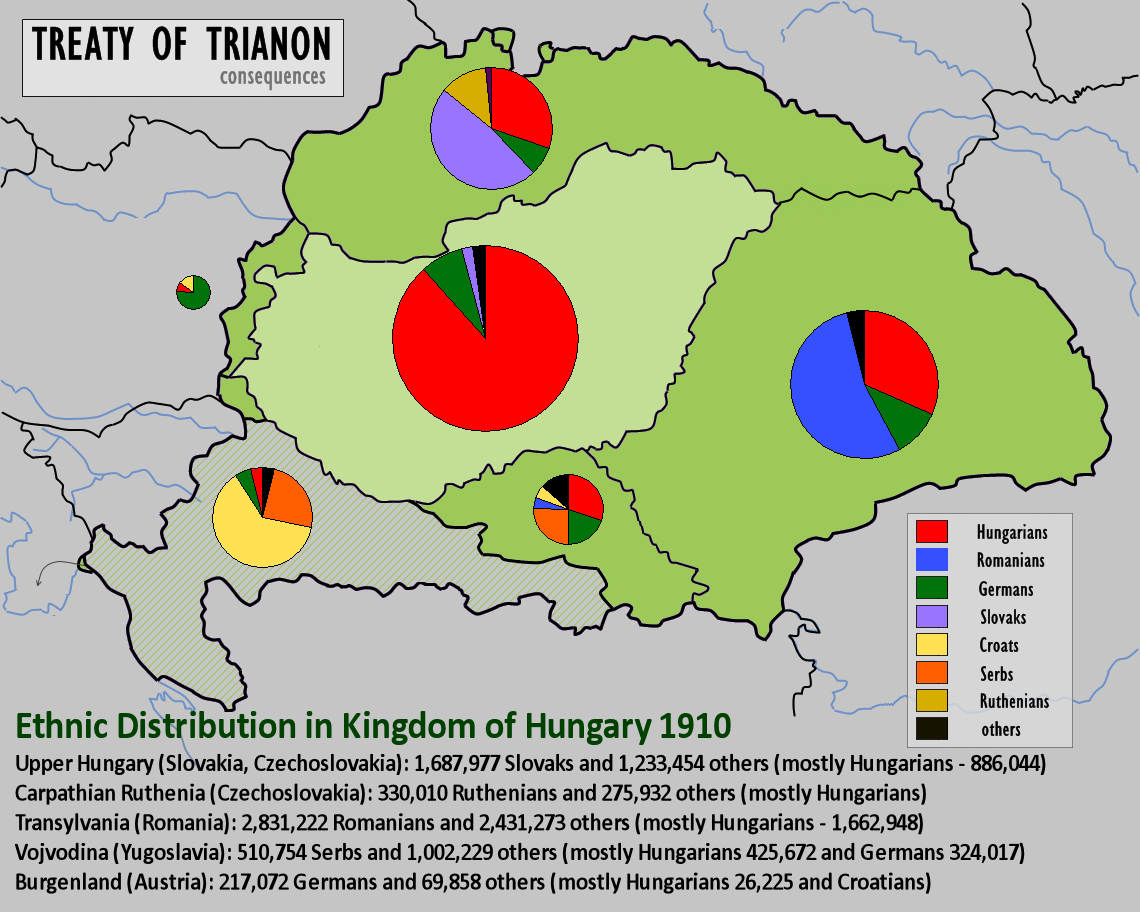
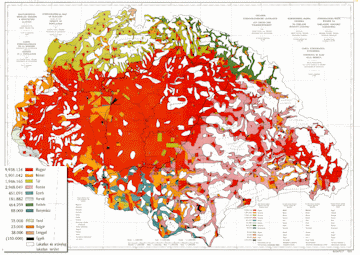
Ethnic Distribution in the Kingdom of Hungary in 1910 (Hungarians shown in red)
[download extra large image 4962x3509]
[download large image 1000x707]
Hungarian populations declined significantly after forced removals such as the Benes Decrees and other pograms, the effects of WWI, and Trianon in 1920. With continued pressure and discriminative policies such as the 2009 Slovak Language Law, this trend continued over the past 90 years.
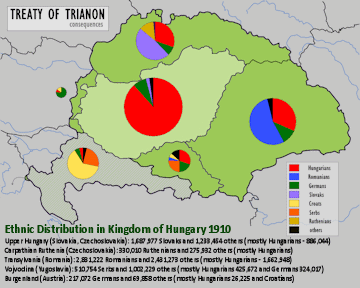
- In Upper Hungary (awarded to Slovakia, Czechoslovakia): 1,687,977 Slovaks and 1,233,454 others (mostly Hungarians - 886,044, Germans, Ruthenians and Roma) [according to the 1921 census, however, there were 1,941,942 Slovaks and 1,058,928 others]
- In Carpathian Ruthenia (awarded to Czechoslovakia): 330,010 Ruthenians and 275,932 others (mostly Hungarians, Germans, Romanians, and Slovaks)
- In Transylvania (awarded to Romania): 2,831,222 Romanians (53.8%) and 2,431,273 others (mostly Hungarians - 1,662,948 (31.6%) and Germans - 563,087 (10.7%)). The 1919 and 1920 Transylvanian censuses indicate a greater percentage of Romanians (57.1%/57.3%) and a smaller Hungarian minority (26.5%/25.5%)
- In Vojvodina 510,754 Serbs and 1,002,229 others (mostly Hungarians 425,672 and Germans 324,017)
- In Vojvodina and Croatia-Slavonia combined (awarded to Yugoslavia): 2,756,000 Croats and Serbs and 1,366,000 others (mostly Hungarians and Germans)
- In Burgenland (awarded to Austria): 217,072 Germans and 69,858 others (mainly Croatian and Hungarian)
[read more on the Treaty of Trianon]
AHF Statements on Trianon:
[read more on the Treaty of Trianon]
Selected AHF Articles on Rumania:
[read more on the Treaty of Trianon]
 You will need the free Adobe Reader to open the following files. Click the image to download. You will need the free Adobe Reader to open the following files. Click the image to download.
Articles and Essays by AHF Members
- "NATO Enlargement" by Frank Koszorus Jr. March 29, 2004
Remarks on the Occasion of the Enlargement of NATO, Corcoran Gallery of Art, Washington, D.C. [download]
---
- "Nato Enlargement And Minority Rights: Prerequisites To Security" by Frank Koszorus, Jr., April 2003
A memorandum that was submitted to Robert A. Bradtke, Deputy Assistant Secretary for European and Eurasian Affairs, and Heather A. Conley, Deputy Assistant Secretary for European and Eurasian Affairs during a roundtable discussion on "NATO Enlargement and the Current State of the Trans-Atlantic Alliance." This submission follows several other intiatives, including submissions to Lord Roberston, Secretary General of NATO. [download]
---
- “Nato Enlargement: Promoting Western Values, Strengthening The Alliance” by Frank Koszorus, Jr., April 29, 2003
A Statement Before The United States Senate Committee On Foreign Relations.
[download]
---
- "U.S. Senate Unanimously Ratifies Nato Treaty; Senators Raise Rights Of Minorities: Federation Supports Efforts Aimed At Encouraging Romania And Slovakia To Respect Rights Of Hungarian Minorities And Restore Communal Properties" - Press Release by Zoltan Bagdy, May 9, 2003 [download]
[read more on the Treaty of Trianon]
Congressional Resolutions and Records
- H.RES 191 - A RESOLUTION urging the "prompt and fair restitution of church properties by Romania and Slovakia - TOM LANTOS / TOM TANCREDO (April 6th 2005) in the House of Representatives [download]
- A RESOLUTION REGARDING THE ISSUE OF TRANSYLVANIAN HUNGARIANS -- HON. DONALD E. `BUZ' LUKENS (Extension of Remarks - February 26, 1990) in the House of Representatives [download]
- VIOLENCE IN TRANSYLVANIA -- HON. DON RITTER (Extension of Remarks - March 22, 1990) in the House of Representatives [download]
- Transylvanian Monitor #14: Property Restitution.
[read more on the Treaty of Trianon]
Join online!

|